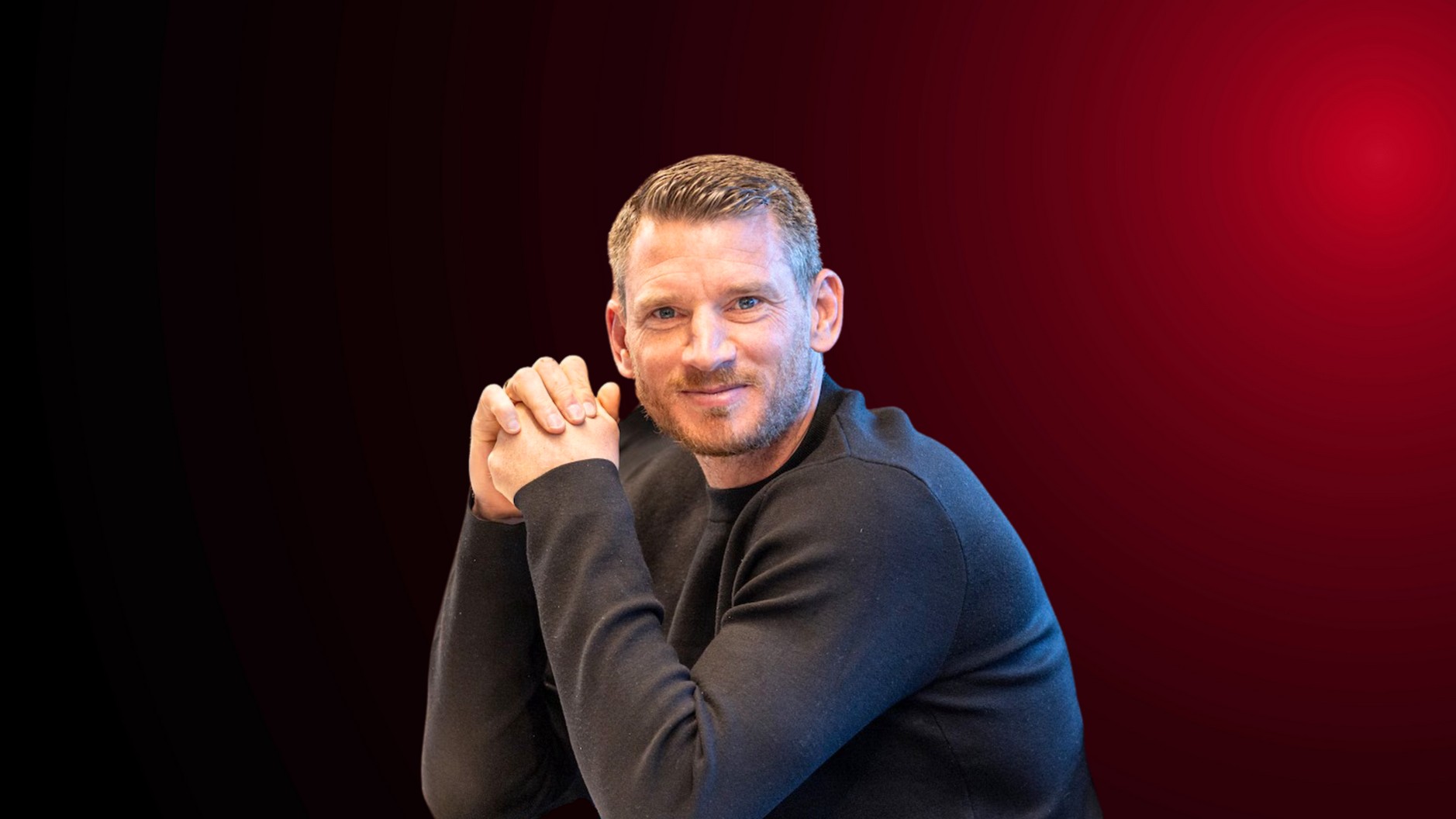
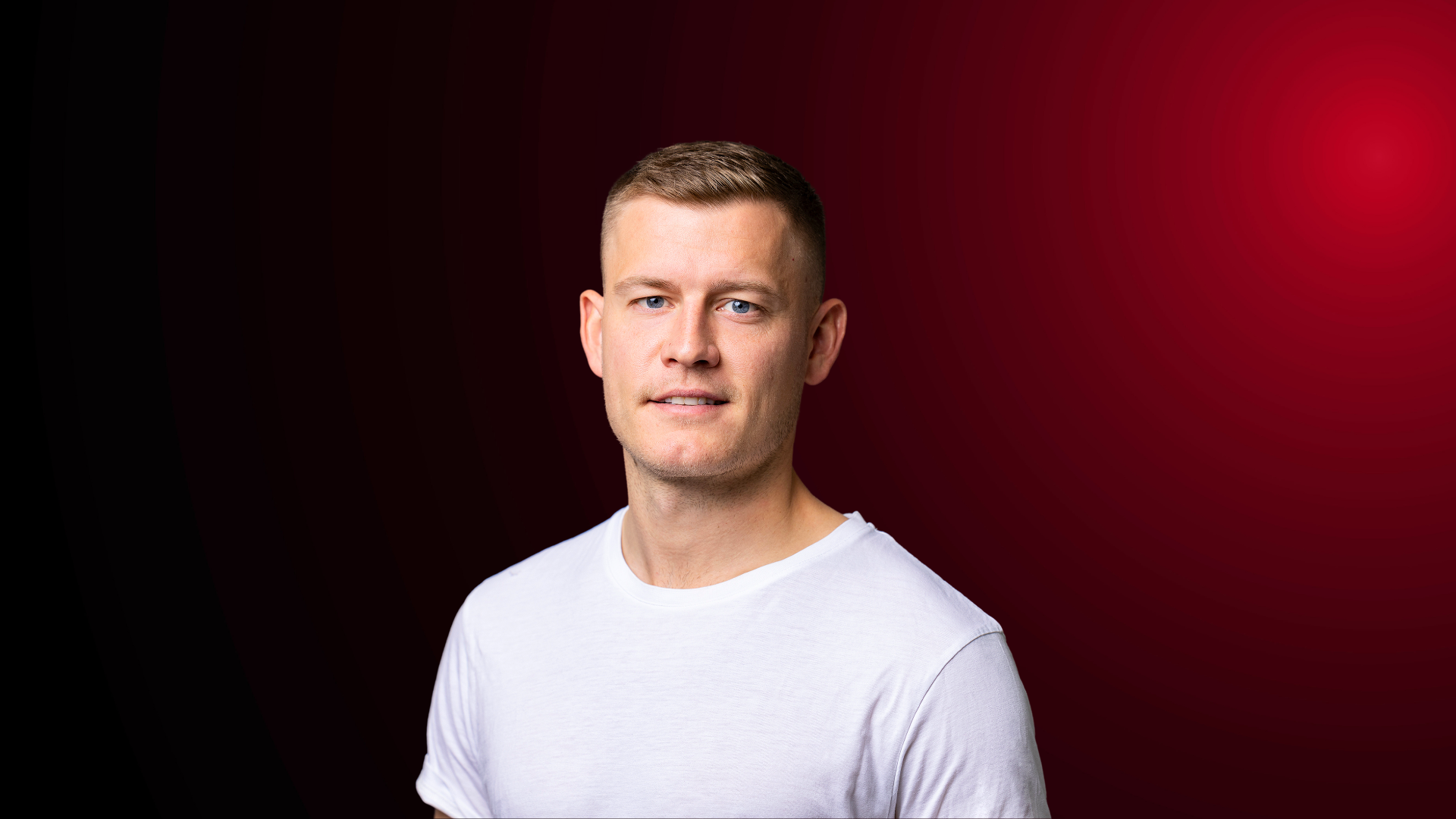
Jan Vertonghen
The Long Game
On leaving home at 16, the conversation that changed his career, building a foundation, and what comes after 157 caps.
Today, Belgium plays its first World Cup match. And for the first time in 12 years, it will do so without Jan Vertonghen in the squad.
Jan represented Belgium on three World Cups and earned 157 caps — more than any player in the country's history. His career took him from AFC Ajax to Tottenham Hotspur, SL Benfica and Anderlecht, while becoming one of the defining figures of Belgium's golden generation.
But this conversation isn't really about appearances, trophies, or records. It's about the lessons, setbacks, and decisions that shaped one of the most respected careers in European football. Jan rarely gives interviews, which makes it all the more special that he made an exception for Road to Legacy.
Jan Vertonghen is the most influential defender Belgian football has ever produced. Currently, he's completing the UEFA Executive Master for International Players (MIP) alongside players like Ivan Rakitić, Simon Kjær and Alfred Finnbogason. As part of the programme, he's undertaking a management internship at the Royal Belgian Football Association.
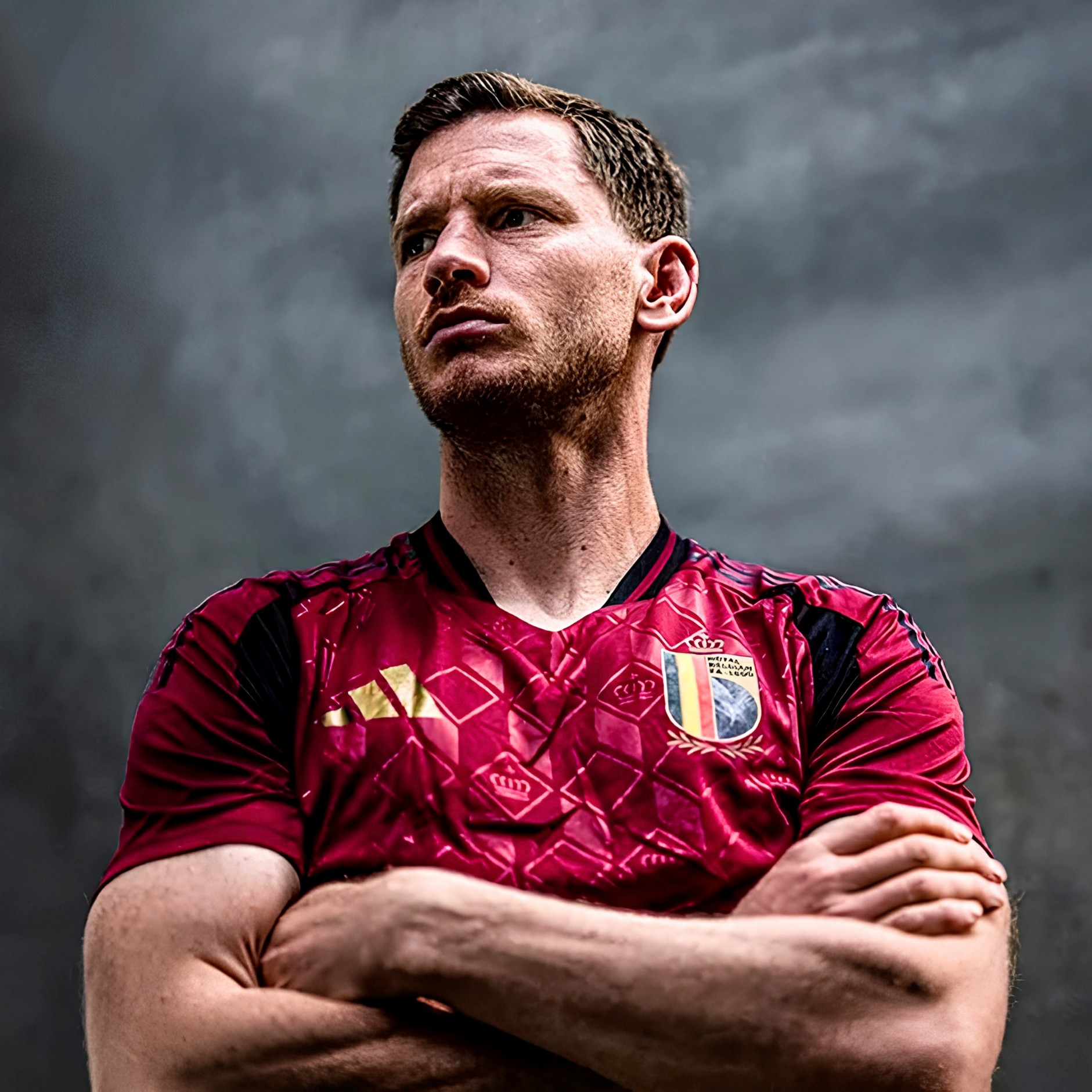
We speak just a couple of weeks before the 2026 World Cup, his first since retiring. It's a unique moment to be inside the Belgian FA, seeing up close how a national team prepares for the biggest tournament in football.
I had 5 or 6 options for my internship, both within football and at other sports organisations. But I specifically chose the Belgian FA because the build-up to the World Cup really interested me. Finance, youth teams, data, performance… when you're a player, those things are so far away. But now, sitting in those rooms with the World Cup coming, it all becomes much more concrete. It's very tangible.
For someone with such an extraordinary career on the field, coaching would have been the obvious next step. But it's never been something he's been drawn to.
What I find interesting is thinking about structures. How you build a team, on and off the pitch. Whether that's a federation, a club in Belgium or the Netherlands, or somewhere else. The process of putting something together pulls me more than the tactical side. The diversity is what I need. That's what I'd miss if I became a coach.
Young and Independent
To understand who Jan Vertonghen is today, you have to go back to the moment he left. He left Belgium at 16 and moved to Amsterdam alone to join Ajax's academy. At the time, his father was ill, and much of his mother's attention was focused on what was happening at home. As a result, Jan was forced to grow up quickly. He learned early to rely on himself, both in football and in life. There was no parent sitting in on meetings with agents, guiding transfer decisions, or helping him navigate the business side of the game.
My brothers were still young. My mother was dealing with the family. Of course we spoke on the phone. But they weren't involved in my choices, not about representation, not about moves or any of those things. That's just how it was. I had to learn to stand on my own two feet quickly.
He grew up in the Flemish countryside, where people tend to know each other well and where anyone who does things differently stands out pretty quickly.
It's a bubble where people are quick to judge when someone is different or does things differently.
Football pulled him out of that bubble. From Ajax to Tottenham, Benfica and eventually Anderlecht, two decades in dressing rooms showed him that there is more than one way to see the world.
It made me much slower to judge. I think I can talk to almost anyone. And I have a lot more understanding for why people do certain things.
His career shaped his family too. His kids have gone to school in London, Lisbon and Belgium, growing up across different cultures and environments. Even late in his career, Vertonghen remained drawn to the idea of experiencing a different part of the world.
It was not for financial reasons. But after my time at Spurs, I really wanted to move somewhere completely different from Europe, like China, South America or Indonesia. A real adventure. But the timing never aligned.
The Shift
But for all the places football took him, one of the most important lessons arrived much closer to home. When I ask him what skill the game gave him that he uses most today, he doesn't mention leadership, resilience or communication. Instead, he talks about self-awareness. He was in his mid-twenties.
I always thought, and it sounds incredibly arrogant, that it revolved around me. I was angry when I was substituted. And when I wasn't playing in the right position, I let it show, with my body language and with a certain attitude.
Then, his wife said something that changed the course of his career.
She made me realise how incredibly arrogant it was to move through football like that. And after that, I really made that switch, to look at things much more positively. I really tried to see it more from the perspective of a coach or a club, rather than the egocentric footballer who always thinks everything revolves around him.
It sounds a bit cringe when I say it out loud.
Maybe. But it's the most honest thing a player at his level can admit: that the shift which shaped everything came not from a trophy or a transfer, but from a conversation at home. The person who went on to build a foundation, invest in people over ideas, and now sits in management meetings at a football federation — that version of Jan Vertonghen came out the other side of that moment.
Jan Vertonghen Foundation
He launched the Jan Vertonghen Foundation in 2018, on the occasion of his 100th cap for Belgium. The Foundation builds playgrounds at hospitals and creates opportunities for children to play, move and connect, particularly those facing illness, disability, rehabilitation or other vulnerable circumstances.
When we visited the Ronald McDonald Children's Hospital at the VU with Ajax, that always stayed with me. I really wanted to do something with it. As a footballer, I have always believed in the power of sport to change lives, but through my foundation I see every day what play and movement can truly mean for children facing difficult circumstances. A play space can transform a hospital from a place of worry into a place of hope.
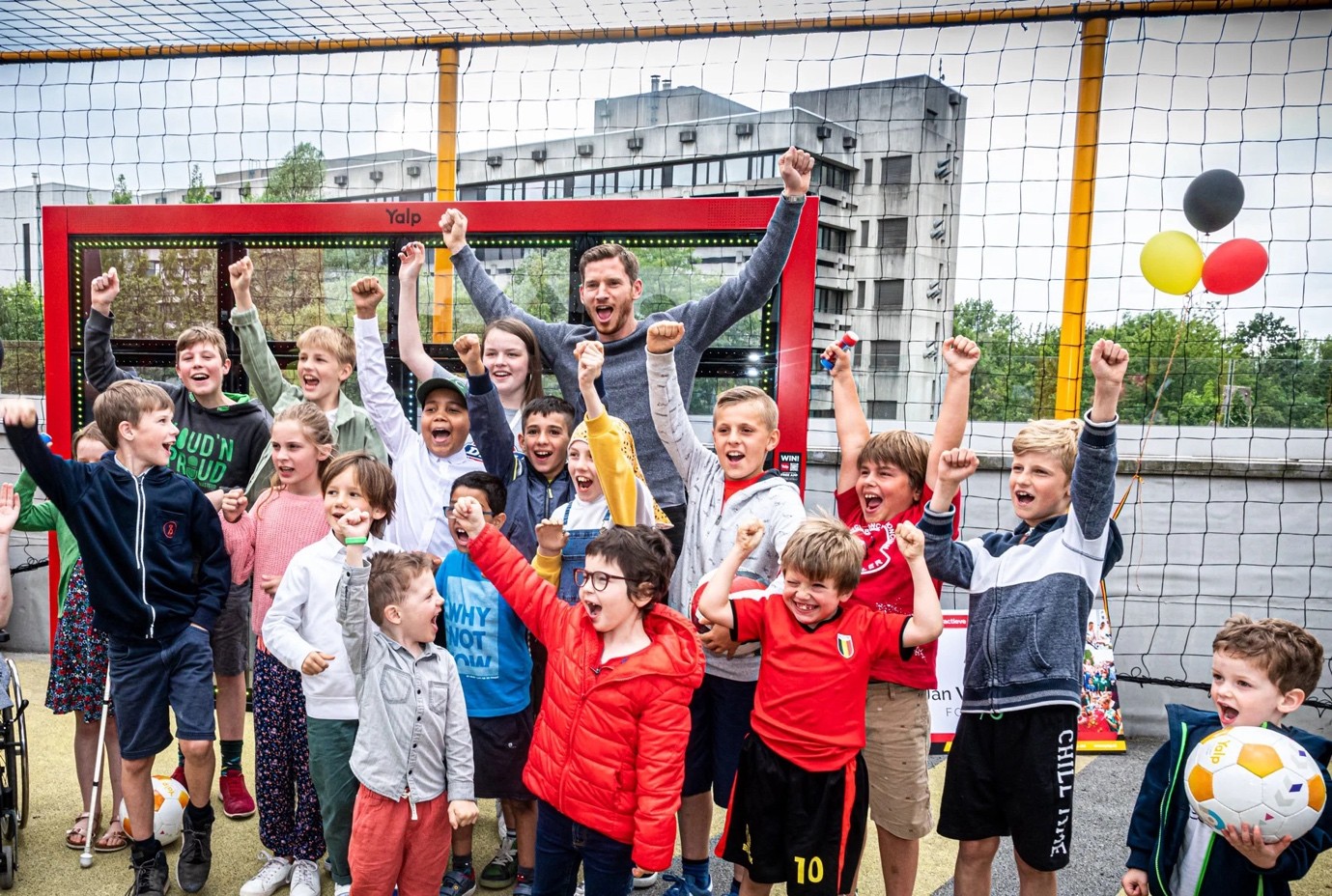
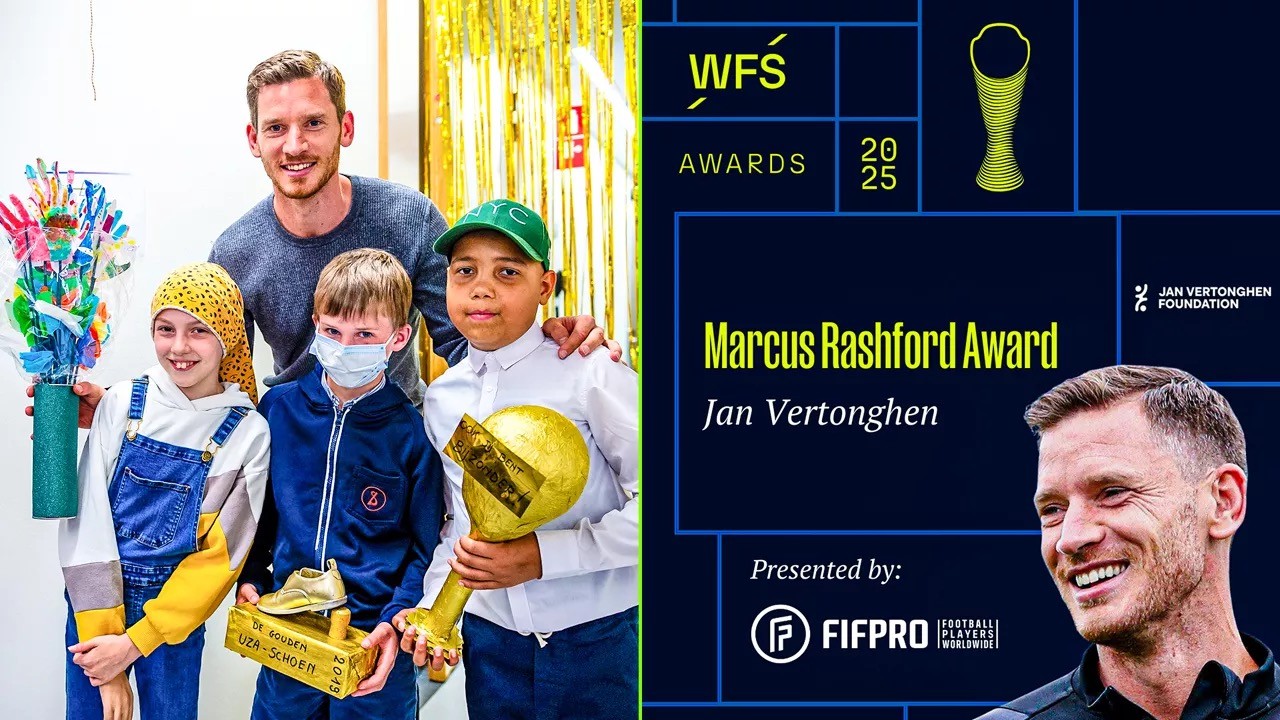
Jan runs the foundation himself, with one employee and full personal involvement. In 2025, the foundation received the Marcus Rashford Award at the World Football Summit, recognition that, as he put it, gave them energy to reach even more children. His ambition is clear: to build something with the impact of the Johan Cruyff Foundation.
To do something like that in Flanders feels like a utopia. But that's the model.
He's very specific about what the foundation stands for, and the type of brands he wants to partner with.
No gambling companies and no beer brands. That doesn't fit the image I want. And the image is everything to me.
Protecting that image has meant making difficult decisions too. Early on, he had to let someone go from the foundation. He's not the kind of person who finds that easy. But it taught him things he couldn't have learned any other way, like how to recognise quality in people.
You often don't find out who you can trust until something goes wrong. I've learned a lot from that. Also for the rest of my business life.
Investing In People
Around his early 30's, still playing, Vertonghen started investing in startups out of genuine curiosity about what was being built outside of football. The philosophy he developed has stayed consistent ever since.
If someone comes to me with an idea, the idea is 20% and the person is 80%. If I can see how passionate they are, I'm almost automatically inclined to say yes before I've even heard what it is. I think I have a fairly good feel for people. Looking back, the one time I ignored that inner voice it caused a lot of pain and effort afterward. Now, even if the idea is good, but I don't have a good feeling about the person, the answer is no.
If someone comes to me with an idea, the idea is 20% and the person is 80%.
That experience also changed the way he looks at business opportunities. Early on, he sometimes assumed his role would be limited to making a financial investment. In reality, it rarely works that way.
Companies often say they don't want much from you except your name. But in the end, they usually want access to your network, your advice or your presence when they're talking to investors. That's not necessarily a bad thing, but you have to be honest about it.
Today, he makes those expectations explicit from the start.
Now I make it very clear upfront what I'm willing to contribute. And if those expectations don't align, it's better not to get involved at all.
More Trust, Shorter Contracts
Looking back on his career, we talk about what he would do differently. While most athletes I speak to immediately point to relationships — people they shouldn't have trusted or opportunities they should have handled differently — Jan's answer is very straightforward.
I should've had more trust in myself and signed shorter contracts. When you've got 1 or 2 years left on your deal, you're in a much stronger position than when you've got 4 or 5. The long contract felt safe, but it cost me.
He is referring to the balance of power between a player and a club when transfer opportunities arise. With a shorter contract, a player typically has more leverage and flexibility. A long-term deal can provide financial security, but it can also leave a player with less influence over the next step in their career. That decision was driven by fear as much as anything else.
I always chose financial security. I was really afraid of injuries, afraid of what could happen.
His first agent was someone he remembers as present at every match, always reachable, and good at motivating. But weaker on contracts and the network side.
He had very few players, which meant he was always reachable. That was good. But he wasn't strong in the financial side.
It's a theme that comes up regularly in my conversations with players. Finding the right people, a strong team that genuinely has a player's long-term interests at heart, is harder than many realise.
The ideal team around you is hard to find early in your career.
Then, after a pause:
You can count yourself lucky if you find it at any point.
The Long Game
The Belgian FA had asked him to travel with the squad to the World Cup as a liaison between the players and staff, a role he wanted. But his schedule didn't allow it. His UEFA MIP programme had sessions in Madrid planned for the summer. He chose his education over the tournament.
His internship ends this month, but Jan has made it clear he wants to remain involved with the Belgian FA. The association believes he has an important role to play in its future. By the time we finish talking, he needs to leave and collect his sons from training. Both of them play football.
I watch them with all my love and passion. Not as a former professional analysing every detail, but just as a father who loves seeing his sons enjoy the game.
Jan left Belgium at 16 with no one making decisions on his behalf. What followed was a career across four countries and three World Cups, a foundation built during his playing years, a portfolio built on instinct, and now a management education most players never pursue. He figured it out as he went.
That's the long game. The trophies and the caps are part of it, but so is the person he became along the way.
Someone who stopped seeing football as something that revolved around him and started seeing it as something bigger than himself. Someone who learned to trust people carefully, back himself, and channel his success into people and causes he genuinely cares about.
His sons are growing up with a father who spent more than two decades at the highest level, shared dressing rooms with players from all around the world, and seen football from almost every angle imaginable. That's a wealth of experience to pass on.
Related
Continue reading.
Sergiño Dest
On the World Cup, choosing the US, building courts, and the legacy he's already shaping at 25.
Niklas Süle
On building games & leaves and German Giant Gin, financial independence, life without social media, and choosing a future beyond professional football.
Holger Badstuber
On Bayern's treble side, the injuries that shaped him, true friendship, and building a circle athletes can actually trust.
Jozy Altidore
On retirement, reinvention, and what it really takes to build something when the structure that defined your life disappears.
Alfred Finnbogason
On scoring Iceland's first-ever World Cup goal, seven countries as a player, and stepping into one of Scandinavia's biggest jobs as Technical Director at Rosenborg BK.
Join
Newsletter.
Be the first to read new conversations and behind-the-scenes notes.